Cricket Pitch Guide: Length, Conditions and Field Positions
Understand the cricket pitch before interpreting the score. Learn the standard pitch length, how the surface differs from the outfield and why conditions affect batting and bowling choices. Match context starts with the ground, but a pitch description never guarantees a particular result.

Table of Contents
Keep the cricket context in view
Use the cricket pitch and conditions guide to connect definitions with the match you are following. Check current fixtures, line-ups and results at their official source.
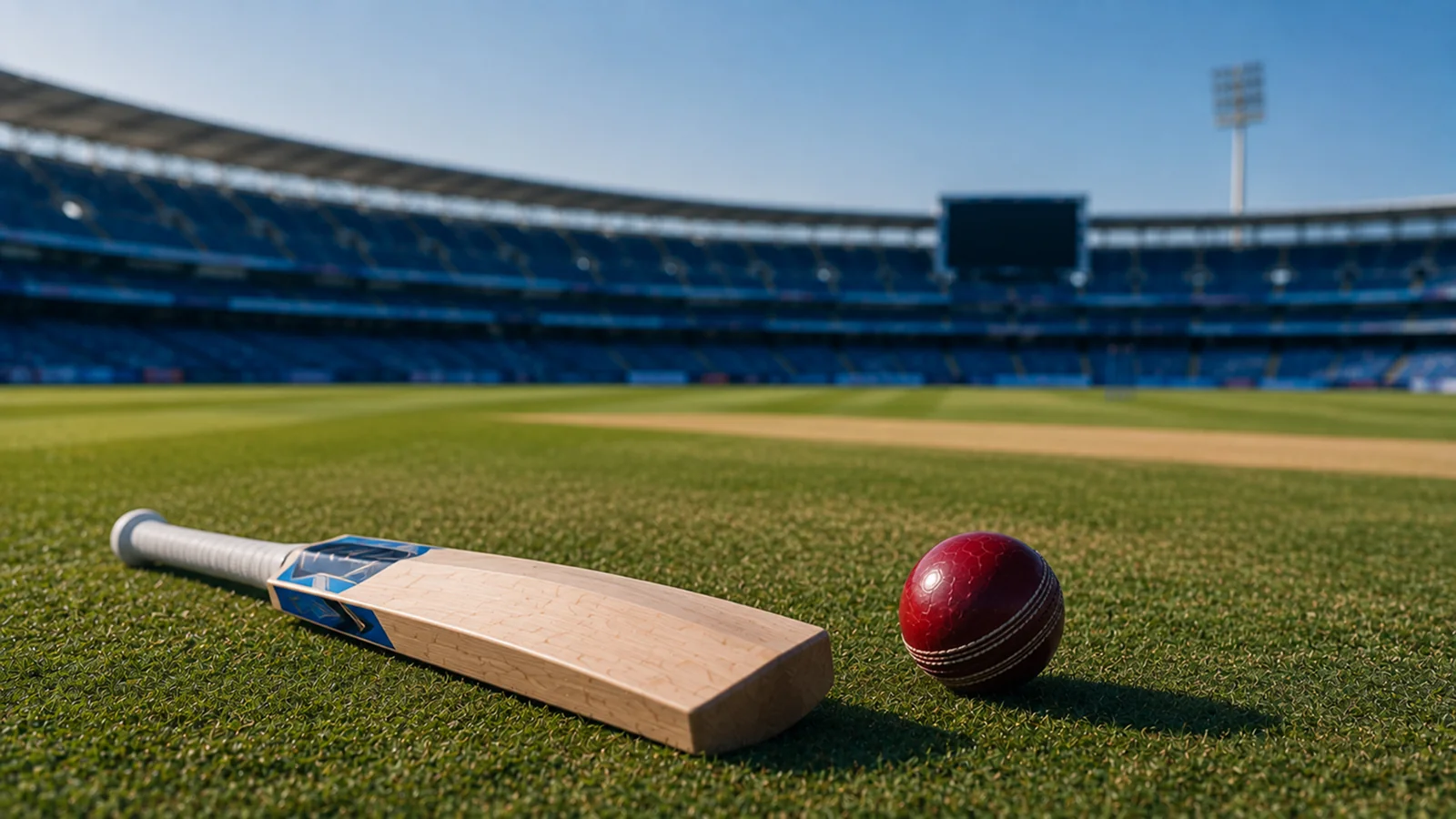
The standard cricket pitch is 22 yards long and 10 feet wide. The pitch is the central playing area between the wickets, rather than the whole field. Crease markings define additional reference lines, so a measurement should specify exactly which points are being compared.

Pitch and outfield
Match context
The outfield surrounds the pitch and extends towards the boundary. Its speed affects how easily a grounded shot reaches the rope. The pitch controls the ball’s bounce and movement after delivery; the outfield influences what happens after the ball is played into space.

Bounce and batting decisions
Match context
Batters adjust to the height, pace and consistency of the bounce. A delivery that arrives lower or more slowly than expected can change shot selection. Watching how the ball behaves across several overs provides more information than a single pre-match photograph.

Field placement on the ground
Match context

Understand cricket pitch and conditions
These explanations connect cricket pitch and conditions with the match record. Read each detail alongside the format and the state of the innings.
Pitch length and width
The standard cricket pitch is 22 yards long and 10 feet wide. The pitch is the central playing area between the wickets, rather than the whole field. Crease markings define additional reference lines, so a measurement should specify exactly which points are being compared.
Pitch and outfield
The outfield surrounds the pitch and extends towards the boundary. Its speed affects how easily a grounded shot reaches the rope. The pitch controls the ball’s bounce and movement after delivery; the outfield influences what happens after the ball is played into space.
Seam and spin
Seam movement and spin are different ways the ball can deviate after pitching. Surface characteristics can encourage one or both, but bowlers still need control and appropriate delivery. Avoid turning a description such as dry or green into a guaranteed prediction.
Bounce and batting decisions
Batters adjust to the height, pace and consistency of the bounce. A delivery that arrives lower or more slowly than expected can change shot selection. Watching how the ball behaves across several overs provides more information than a single pre-match photograph.
Weather and match context
Moisture, sunlight, rain and evening conditions can influence play and preparation. Their effect varies by venue and timing. Use a current weather report for a specific fixture and keep it separate from a general explanation of how conditions might affect cricket.
Field placement on the ground
A captain arranges fielders around the striker to support the bowling plan and protect scoring areas. Boundary dimensions and the batter’s preferred shots can influence that choice. Fielding restrictions still apply under the competition’s conditions, regardless of the preferred tactical setup.
How to follow cricket pitch and conditions
Use this sequence when a match report or scorecard sends you looking for a clearer explanation of cricket pitch and conditions.
- Confirm the match. Start with the team category, date and competition. Check whether the fixture is a Test, ODI or T20 before applying an explanation to its scorecard.
- Read the innings position. Use the innings label, runs, wickets and valid balls to establish the position. That gives the discussion of cricket pitch and conditions a clear starting point instead of an isolated number.
- Add the conditions. Consider the surface, the phase of the innings and the available players. Those details can change the meaning of a scoring rate or a bowling spell.
A route through cricket pitch and conditions
Build your understanding of cricket pitch and conditions in stages. Each step adds context that a headline or a short score line can leave out.
Start with the vocabulary
Use the main guide to identify the terms that appear most often in cricket pitch and conditions. Clarify the format and the innings before moving to a more detailed explanation.
Connect terms to a scorecard
Open a completed match record and locate the batting card, bowling figures and fall of wickets. This makes it easier to connect a definition with an actual part of an innings.
Consider match resources
Track wickets and deliveries as well as runs. The same score can describe different situations when one side has more overs or more established batters available.
Check competition details
If a question depends on a revised target, review procedure or tie-break, use the current event regulations. General explanations cannot replace a competition-specific rule.
LZY Cricket focuses on explaining cricket pitch and conditions for readers following cricket in India. The aim is to make the match easier to understand through definitions, examples and context.
A closer look at cricket pitch and conditions
Read the sections below with the match format and innings in view.
What this guide covers
The main sections address cricket pitch and conditions, with related explanations of scoring, formats and match conditions. They are written for readers who want to understand the record rather than just scan a result.
- What this guide covers. The main sections address cricket pitch and conditions, with related explanations of scoring, formats and match conditions. They are written for readers who want to understand the record rather than just scan a result.
- Reading a match report. A match report becomes clearer when you identify the format, innings and remaining resources first. For current fixtures, selections and results, check the official event source.
- Where rules come from. The Laws of Cricket maintained by MCC provide the foundation. ICC and competition playing conditions supply event-specific details. The source links below help you check the relevant document directly.
Reading a match report
A match report becomes clearer when you identify the format, innings and remaining resources first. For current fixtures, selections and results, check the official event source.
Where rules come from
The Laws of Cricket maintained by MCC provide the foundation. ICC and competition playing conditions supply event-specific details. The source links below help you check the relevant document directly.
Learning from examples
Worked examples connect the definitions with the numbers in a scorecard. Use them to practise reading an innings, then check the calculation against the full match context.
Rules and formats: MCC Laws of Cricket · ICC playing conditions · ICC format guide
Cricket grounds and match themes






Valid balls in an over
Overs in a full T20 innings
Overs in a full ODI innings
Standard pitch length in yards
Cricket pitch and conditions: common questions
Explore the cricket explanations and questions in this guide.
What is the standard cricket pitch length?
The standard pitch measures 22 yards between the bowling creases. That is 66 feet, or approximately 20.12 metres.
How wide is a cricket pitch?
The standard pitch is 10 feet wide, approximately 3.05 metres. The surrounding field is much larger.
Is the pitch the same as the ground?
No. The pitch is the central strip between the wickets. The ground also includes the outfield and boundary area.
Does a dry pitch always favour spin?
No. Surface preparation, wear, moisture, bowling skill and the ball all matter. A broad description cannot guarantee the way a match will play.
Why can the same venue produce different scores?
Conditions, pitch preparation, weather, opposition and match format vary. A venue average is context rather than a promised total.
Are cricket fielding positions fixed?
No. Captains can move fielders to suit a plan, subject to the applicable fielding restrictions and other rules.